

When it comes to feeding babies, parents often find themselves navigating a minefield of dos and don’ts. One question that pops up is whether those delightful Honey Nut Cheerios can make their way into a little one’s bowl. After all, who wouldn’t want to share the joy of crunchy goodness with their tiny taste testers?
But hold on! Before diving into the world of sweetened oats, there’s a bit more to consider. While these little rings of happiness might seem harmless, they come with their own set of rules. So, can babies have Honey Nut Cheerios? Let’s explore the sweet side of this crunchy conundrum and uncover what parents really need to know before introducing this breakfast classic to their tiny tots.
Understanding Honey Nut Cheerios
Honey Nut Cheerios attract parents due to their familiar taste and appealing shape. Analyzing their ingredients and nutritional value reveals crucial information for deciding on their suitability for babies.
Ingredients Breakdown
Honey Nut Cheerios contain whole grain oats, sugar, honey, and almond flavor. Whole grain oats provide a fiber source but may trigger allergies in some infants. Sugar and honey add sweetness but pose risks for infants under 12 months. It’s crucial to avoid honey for babies due to the risk of botulism. Almond flavor, while pleasant, can also cause allergic reactions in some children. Always consult with a pediatrician before introducing new cereals.
Nutritional Value
Nutritionally, Honey Nut Cheerios offer essential nutrients but contain added sugars. Each serving contains 1 gram of fiber and small amounts of protein, making it a light snack. Vitamins and minerals such as iron and calcium enhance its appeal. However, the sugar content, approximately 9 grams per serving, raises concerns for young children. Babies require nutrient-dense foods for growth and development, so moderation is key. Parents must weigh the benefits against potential health implications carefully.
The Age Factor
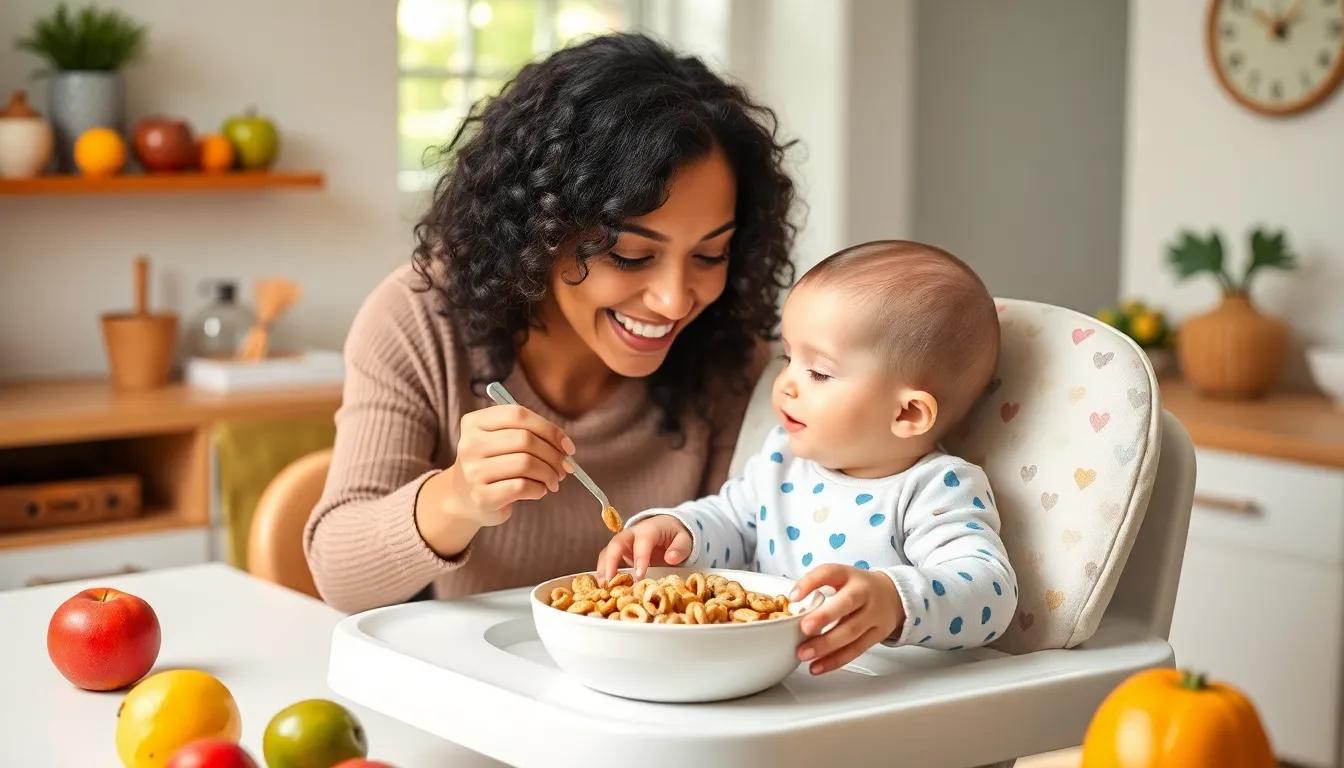
Understanding when to introduce Honey Nut Cheerios to a baby’s diet is crucial. Parents should consider age guidelines and potential health risks before making this decision.
When Can Babies Start Eating Cereal?
Cereal introduction usually occurs around 4 to 6 months, depending on the baby’s development. Most experts recommend starting with iron-fortified cereals, such as rice or oat. Delaying the introduction of sweetened cereals, like Honey Nut Cheerios, until after the first year provides more nutritional stability. Infants need a nutrient-rich diet to support growth, making standard cereals a better option initially. Waiting until the baby can handle textures and flavors ensures a smoother transition to a wider variety of foods.
Risks of Early Introduction
Introducing Honey Nut Cheerios too early carries multiple risks. Babies under 12 months face botulism dangers due to honey, an ingredient in this cereal. Allergic reactions may also occur from oats or almond flavor, potentially causing discomfort or health issues. Excess sugar content, approximately 9 grams per serving, could lead to dental problems and unhealthy eating habits. Prioritizing nutrient-dense options minimizes these risks and contributes to healthier outcomes. Always consult a pediatrician for personalized advice on introducing cereals safely and effectively.
Allergen Considerations
Parents must be aware of common allergens when considering Honey Nut Cheerios for their babies. This cereal contains ingredients that may cause allergic reactions.
Honey Allergy
Honey poses a significant risk for infants under 12 months due to the potential for botulism. Botulism can cause severe and sometimes fatal illness, affecting an infant’s nervous system. Symptoms may include weakness, poor feeding, and difficulty breathing. Parents should avoid honey in all forms, even when included in products like Honey Nut Cheerios. Consulting a pediatrician before introducing any honey-based products is crucial for ensuring infant safety.
Nut Allergy
Almond flavoring in Honey Nut Cheerios may trigger nut allergies in some children. Symptoms may include hives, swelling, or digestive issues. Given that peanut and tree nut allergies are common, it’s vital to check for these ingredients carefully. Introducing any food containing allergens requires caution, especially if there’s a family history of allergies. Parents should consult a healthcare provider to assess the risk before introducing products that contain almonds or any other nuts.
Health Benefits for Babies
Honey Nut Cheerios can offer some health benefits for babies when introduced carefully and at the right time. This section discusses the nutritional aspects and encourages healthy eating habits for young children.
Nutritional Benefits
Whole grain oats serve as a primary ingredient in Honey Nut Cheerios, providing essential fiber that is important for digestion. The cereal contains iron, which supports healthy development and growth. Vitamins like B6 and folic acid contribute positively to a baby’s overall nutrition. Sugar levels reach about 9 grams per serving, making moderation crucial to prevent excessive sugar intake. Although light in fiber and protein, these cereals can serve as an occasional treat when balanced with other nutrient-dense foods.
Encouraging Healthy Eating Habits
Introducing Honey Nut Cheerios can encourage healthy eating habits in young children. When parents start offering cereals, they can pair them with fruits or yogurt, enhancing nutritional value. Gentle exposure to a variety of foods helps babies develop their taste preferences. Enjoying meals as a family and creating positive mealtime experiences can also promote healthy eating habits early on. Parents can model healthy choices by incorporating cereals thoughtfully into a balanced diet while monitoring portion sizes.
Potential Risks and Concerns
Parents should be aware of several risks associated with introducing Honey Nut Cheerios to babies. Certain considerations help ensure a safe experience for little ones.
Choking Hazards
Choking poses a risk when babies consume small, hard foods. Pieces of Honey Nut Cheerios can break off, leading to potential choking incidents. Babies may not be adept at chewing crunchy textures, increasing this danger. To mitigate choking hazards, ensure pieces remain small and supervise closely during mealtime. Choosing softer foods initially helps establish safe eating practices. Consulting with a pediatrician about safe food introduction can provide additional guidance.
Sugar Content
High sugar content in Honey Nut Cheerios raises health concerns. Each serving contains about 9 grams of sugar, which can contribute to unhealthy eating habits if consumed too early. Excess sugar increases the risk of cavities in developing teeth. It may also lead to a preference for sweeter foods, complicating future feeding. Parents should prioritize nutrient-dense alternatives for young children, opting for cereals low in added sugars during early development. Balancing treats with wholesome options ensures better long-term health outcomes.
Expert Opinions
Parents often seek advice from healthcare providers regarding introducing Honey Nut Cheerios into infants’ diets. Several pediatricians recommend caution, particularly with the cereal’s sugar content. They note that babies under 12 months should avoid honey due to the risk of botulism, a potentially fatal condition.
Pediatrician Recommendations
Pediatricians generally advise waiting until at least 12 months before introducing Honey Nut Cheerios. This recommendation stems from concerns about honey, which can cause serious health issues in young children. Experts also emphasize the importance of evaluating a baby’s overall diet, prioritizing iron-fortified cereals as the first choice for introducing solids. Balanced nutrition plays a critical role in a baby’s growth and development, making it essential to consult with a pediatrician for personalized guidance.
Dietary Guidelines
Dietary guidelines suggest that parents introduce solid foods around 4 to 6 months. Experts recommend focusing on nutrient-dense foods that provide adequate fiber, protein, and vitamins. Honey Nut Cheerios, with their sugar content of approximately 9 grams per serving, may not align with guidelines encouraging limited added sugars for children. Gradual introduction of cereals allows for monitoring any potential allergic reactions. Establishing healthy eating habits early helps lay the foundation for lifelong health.
Introducing Honey Nut Cheerios to a baby’s diet requires careful consideration and timing. While the cereal has appealing flavors and some nutritional benefits, the risks associated with added sugars and potential allergens can’t be overlooked. Parents should prioritize nutrient-dense foods and consult with a pediatrician before making any decisions.
It’s crucial to wait until after the first year for sweetened cereals and to remain vigilant about choking hazards. Establishing healthy eating habits early on sets the foundation for a child’s long-term health. Balancing treats like Honey Nut Cheerios with wholesome options is key to promoting a well-rounded diet for growing infants.


