

Imagine this: you’re at an art gallery, surrounded by stunning visuals and captivating sounds, all perfectly synchronized. It feels like a symphony of creativity, doesn’t it? Welcome to the vibrant world of Arts Audio Video Technology and Communications. This field encompasses everything from music production to video editing, revolutionizing how artists express themselves. Whether you’re a seasoned pro or just curious about how technology shapes creativity, this article dives deep into the amalgamation of art and technology. Buckle up: a fascinating journey awaits.
Overview Of Arts Audio Video Technology
Evolution Of Audio Video Technology In The Arts
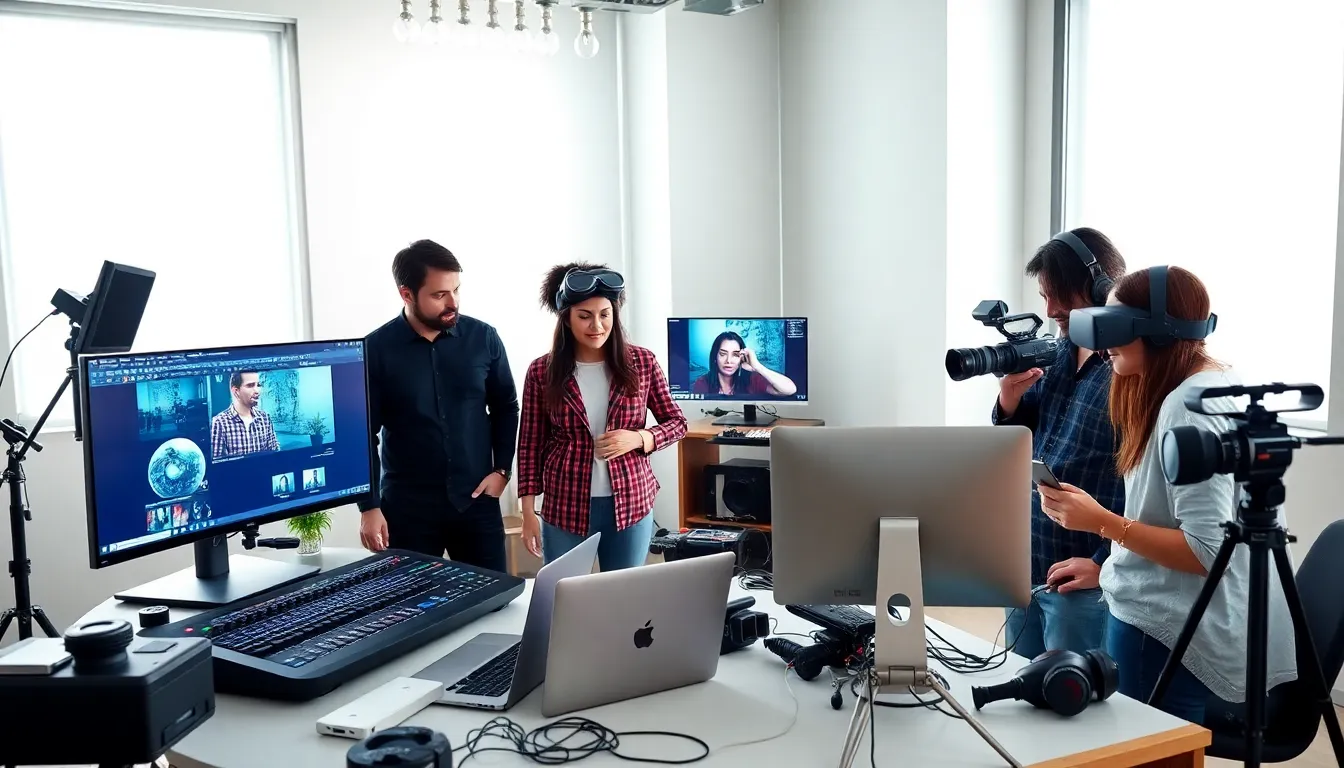
The journey of audio and video technology in the arts traces back to the earliest days of sound and image manipulation. The invention of the phonograph in the 19th century marked a pivotal turning point, allowing for sound recordings that forever changed music production. Fast forward to the 20th century, with the rise of television and eventually, digital platforms. Video art emerged, blending visual elements with audio, opening new avenues for artistic expression.
As technology evolved, so did the tools available to artists. Today, advancements like virtual reality (VR) and augmented reality (AR) are pushing the boundaries, enabling immersive installations that engage audiences on multiple sensory levels. Artists can now create experiences that not only showcase their work but also invite interaction, fundamentally transforming the viewer’s role from passive spectator to active participant.
Impact Of Audio Video Technology On Creative Expression
The influence of audio and video technology on creative expression is immense. Artists today enjoy unfettered access to a toolkit that can amplify their voice in unprecedented ways. With just a laptop and some software, a musician can record, mix, and distribute their music to a global audience within minutes. Video artists can produce high-quality work without the need for massive budgets, democratizing the creative process.
Also, the blend of genres has never been more pronounced. Traditional boundaries of art forms have blurred, leading to innovative fusions. For instance, opera combined with electronic music creates an entirely new auditory experience, enticing diverse audiences. In this dynamically evolving landscape, technology is not merely a tool: it’s a partner in the creative process, continually shaping how messages are conveyed and stories are told.
Key Components Of Audio Video Technology
Audio Equipment and Tools
Audio equipment has seen significant advancements, ushering in an era of high-fidelity sound. Microphones, speakers, and mixing consoles have transformed, allowing even amateur musicians to achieve studio-quality recordings. High-definition microphones pick up nuances in vocal performances, while digital audio workstations (DAWs) provide platforms for recording, editing, and producing music seamlessly.
Also, software plugins offer a plethora of sound effects and audio processing capabilities, empowering artists to experiment and refine their sound. The rise of mobile apps has made music production even more accessible, enabling anyone to compose on-the-go with the touch of a button.
Video Production Technologies
Video production has also witnessed remarkable innovations. From professional cameras that capture stunning visuals to editing software that simplifies post-production, artists have an arsenal of tools at their disposal. Techniques like green screen technology allow creators to place their subjects in fantastical settings, broadening the scope of creativity.
Besides, the accessibility of online video platforms has changed the game. Artists can share their work widely without gatekeepers, reaching niche audiences that were once hard to find. Live streaming, tutorials, and collaborative projects thrive in this environment, reshaping how artists engage with their fans and each other.
Communications in Arts Through Technology
Digital Distribution Platforms
Digital distribution platforms have revolutionized how art is consumed and shared. Services such as Spotify, YouTube, and Vimeo allow artists to distribute their work far beyond geographical limitations. This global reach means that a small independent artist can be heard in the same breath as major labels, democratizing music and art alike.
Social media also plays a crucial role, providing real-time engagement between artists and their audience. It’s now possible for a musician to post a snippet of a new song on Instagram and receive feedback within hours. This interaction fosters a sense of community and allows for an open dialogue around creative processes.
Collaboration Tools For Artists
Collaboration in the arts has evolved significantly. With tools like Slack, Trello, and Google Workspace, artists can connect, share ideas, and work on projects together, regardless of physical location. This virtual collaboration fosters diverse perspectives, enhancing creativity and sparking innovation. Artists can draft, revise, and finalize projects in real time, making the process more efficient and enjoyable.
Future Trends In Arts Audio Video Technology
Emerging Technologies Shaping The Future
As the landscape of arts audio video technology continues to shift, several emerging technologies stand out. Artificial intelligence (AI) is beginning to play a role in various areas, including sound engineering and video production. AI tools can analyze compositions and suggest arrangements or enhancements, making the creative process more streamlined.
Besides, immersive technologies like VR and AR are not just tools, but platforms for experiences. Artists can create whole worlds for audiences to explore, moving beyond screens and into immersive environments that offer multisensory engagement. This opens new pathways for storytelling and audience interaction, redefining how art is perceived.
Sustainable Practices In Audio Video Production
Another notable trend is the increasing focus on sustainability in audio and video production. Artists and technicians are becoming more conscious of their environmental impact. From using energy-efficient equipment to adopting digital distribution methods that reduce physical media waste, the industry is making strides toward greener practices. This shift not only benefits the planet but resonates with audiences who value conscientious production methods.


