

In a world where talking to your gadgets is no longer reserved for sci-fi movies, smart speakers have become the life of the digital party. These nifty devices don’t just play your favorite tunes; they’re like having a personal assistant who never takes a coffee break. Imagine asking your speaker to set reminders, control your smart home, or even tell you a joke—without the awkwardness of a human audience.
Overview of Smart Speakers
Smart speakers serve as interactive devices that enhance daily life through intuitive technology. These tools deliver hands-free assistance, making daily tasks seamless.
Definition and Purpose
Smart speakers are voice-activated devices that function primarily as home assistants. They enable users to perform tasks like controlling smart home devices, setting reminders, and accessing information. By responding to voice commands, these speakers streamline interaction without physical input, catering to convenience and enhancing user experience. Different brands, including Amazon Echo and Google Nest, offer unique capabilities, ensuring diverse applications in various home environments.
Key Features
Smart speakers showcase several standout features that enhance their utility. Voice recognition technology enables accurate response to commands. Wireless connectivity supports integration with other smart home devices. Many models provide music streaming from various platforms, while others feature built-in virtual assistants for instant access to information. Additionally, recent models incorporate advanced sound quality for immersive audio experiences. Compatibility with multiple third-party applications extends their functionality beyond mere assistance.
Popular Smart Speaker Brands
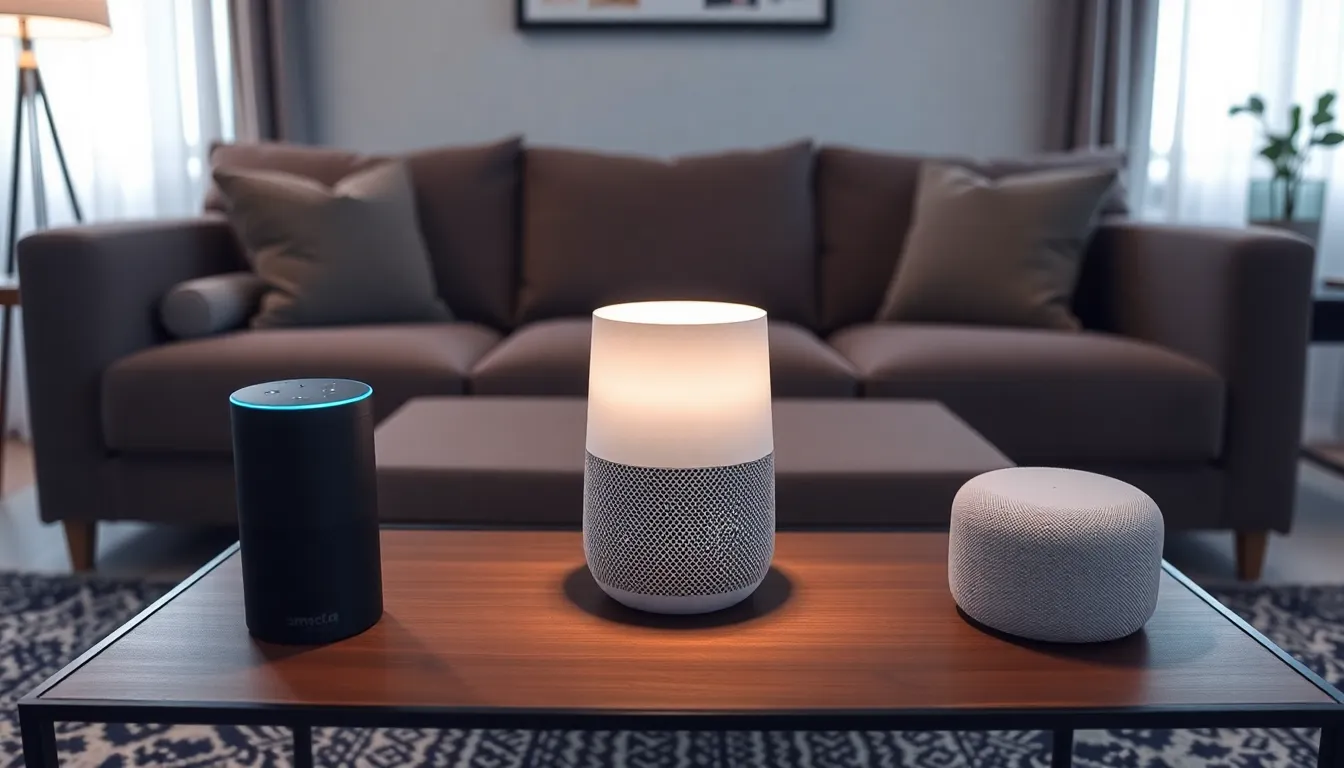
Smart speakers have gained popularity due to their innovative features and capabilities. Various brands offer unique options suited for different user preferences.
Amazon Echo
Amazon Echo leads the smart speaker market with its Alexa voice assistant. Users can control their smart home devices seamlessly through voice commands. Various models exist, including Echo Dot and Echo Show, each providing distinct features such as display screens or compact designs. Robust music streaming services integrate easily with the device, delivering high-quality audio. Compatibility with a wide range of third-party applications enhances its functionality, allowing for personalized user experiences.
Google Nest
Google Nest smart speakers prominently feature the Google Assistant for efficient task management. Voice recognition technology enables users to ask questions, control compatible devices, or play music effortlessly. Models like Nest Mini and Nest Hub cater to different needs, from compact designs to interactive displays. Enhanced sound quality adds depth to listening experiences, making them ideal for music enthusiasts. Integration with Google services like Calendar and Maps allows for a comprehensive smart home ecosystem.
Apple HomePod
Apple HomePod emphasizes superior sound quality and seamless integration with the Apple ecosystem. Siri serves as its built-in voice assistant, providing instant access to information and smart home control. Models such as HomePod and HomePod mini cater to various audio preferences while delivering rich, immersive sound. HomeKit compatibility allows users to manage smart home devices effortlessly. Additionally, privacy features ensure user data remains secure, appealing to those concerned about information protection.
Smart Speakers in Everyday Life
Smart speakers integrate seamlessly into homes, enhancing daily routines and simplifying tasks. Their versatility extends across various aspects of everyday life.
Home Automation
Home automation relies heavily on smart speakers. These devices act as control hubs, allowing users to manage lighting, thermostats, and security systems through voice commands. With compatibility across different smart home products, users enjoy a streamlined experience. Users can schedule routines, such as adjusting the temperature or lighting, with simple voice prompts. Furthermore, smart speakers enable remote control capabilities, allowing users to manage their home environments while away. Automation promotes energy efficiency by ensuring devices operate only when needed. Enhanced connectivity creates a cohesive smart home ecosystem, ultimately improving convenience and comfort.
Entertainment
Entertainment significantly benefits from smart speakers. Streaming music remains one of their primary functions, enabling users to access vast libraries across various platforms. Users can request songs, playlists, or genres hands-free, improving the enjoyment experience. Additionally, smart speakers facilitate audiobook and podcast playback for those seeking diverse audio content. Users find it easy to control volume, skip tracks, or pause playback using voice commands. Furthermore, compatibility with smart TVs enhances the entertainment experience, allowing users to control video playback or access streaming services. Immersive sound quality complements visual entertainment, ensuring that listening experiences are rich and engaging.
Privacy and Security Concerns
Smart speakers raise important privacy and security concerns. Users must recognize the potential vulnerabilities associated with these devices.
Data Collection Practices
Smart speakers collect data to improve user experience, which raises privacy issues. Voice data, personal preferences, and interactions are often stored in the cloud. Some brands maintain extensive logs of user queries to enhance voice recognition technology. This collected data may be shared with third parties for targeted advertising or service improvement. Users without understanding of data collection practices may unintentionally expose personal information. It’s crucial to regularly review privacy settings and service agreements to minimize data sharing.
Measures to Enhance Security
Implementing security measures can mitigate risks associated with smart speakers. Users should enable two-factor authentication to protect accounts from unauthorized access. Regularly updating device software prevents vulnerabilities. Voice recognition settings can be adjusted to limit device responsiveness, reducing unintended activations. Mute buttons provide a physical way to disable microphones, ensuring privacy during sensitive moments. Awareness of the types of information shared aids in making informed decisions about device use.
Future of Smart Speakers
Smart speakers continue to evolve, driven by advancements in technology and shifting consumer demands. Innovations shape their capabilities, enhancing user experiences and expanding functionality.
Emerging Technologies
AI integration plays a crucial role in enhancing smart speaker performance. Developers consistently improve machine learning algorithms, enabling more accurate voice recognition and natural language processing. Multi-room audio technology provides immersive sound experiences throughout homes. Furthermore, advances in smart home integration ensure seamless interactions with other devices, allowing users to streamline their environments. Companies focus on enhancing privacy features by incorporating advanced encryption methods. Voice biometrics enable personalized experiences by recognizing individual users through their voices.
Market Trends
Market analysis indicates steady growth in the smart speaker industry. Sales projections estimate a compound annual growth rate (CAGR) of 20% through 2027. Consumer preferences are shifting towards multifunctional devices that provide home automation, entertainment, and security features. Data shows a rising interest in sustainability, as brands prioritize eco-friendly materials and energy-efficient designs. Personalization drives customer loyalty, prompting brands to offer customized features and services. Competition among leading brands intensifies, leading to continuous innovation and improved value propositions for consumers.
Smart speakers have transformed the way people interact with technology in their homes. With their ability to manage tasks provide entertainment and control smart devices hands-free they’ve become essential tools for modern living. As brands continue to innovate the future looks promising with advancements in AI and enhanced privacy measures leading the charge.
Consumers can expect even more integration with smart home systems and improvements in audio quality. The growing demand for multifunctional devices underscores the importance of these gadgets in everyday life. As they evolve smart speakers will likely become even more central to home automation and personal convenience making them indispensable companions in the digital age.


